What Belt Slip and Belt Burn Actually Are
Every CFMOTO CVT works by friction, the belt has to grip the clutch sheaves hard enough to transfer power without sliding. When the belt slides against the sheaves instead of gripping, that friction turns into heat instead of forward motion. That heat is what you smell as burnt rubber, and it is what glazes the belt, cooks the sheaves, and eventually destroys the belt. A burnt smell is not normal wear; it is your machine telling you the clutch is not doing its job.
The Common Causes
Most CFMOTO belt-burn complaints come down to a handful of causes. The most common is the factory clutch calibration itself combined with a change to the machine. CFMOTO clutches leave the factory tuned conservatively, and the moment you add larger tires, a lift, or heavier loads without recalibrating the clutch, the clutch can no longer clamp the belt hard enough under load, so it slips. Big tires are the number one offender: they dramatically increase the load the clutch has to move, and stock weights and springs simply cannot keep up.
Other causes include a worn or glazed belt that has lost its grip, a belt that was never properly broken in and glazed on its first hard pull, a stretched or worn secondary spring, oil or grease contamination on the sheaves, and simply lugging the machine at too-low RPM in deep mud or on steep climbs where the belt cannot stay in its grip range.
How to Diagnose It
Start simple. Pull the CVT cover and inspect the belt: glazed, shiny sidewalls and a slick surface mean it has been slipping. Check the sheaves for bluing or scoring from heat. Wipe a clean finger on the sheave faces, any oil film means contamination that must be cleaned before anything else. Measure the belt width against spec; if it is under, it is worn out. Note what you have changed on the machine recently, especially tire size, because that is usually the trigger.
The Fixes That Actually Work
If the belt is glazed or worn, replace it with the correct belt and break it in properly, 20 miles of easy, varied-throttle riding with no hard launches. But if you have changed tire size or added load and the machine is slipping, a new belt alone will burn up just like the last one. The real fix is recalibrating the clutch for the new load.
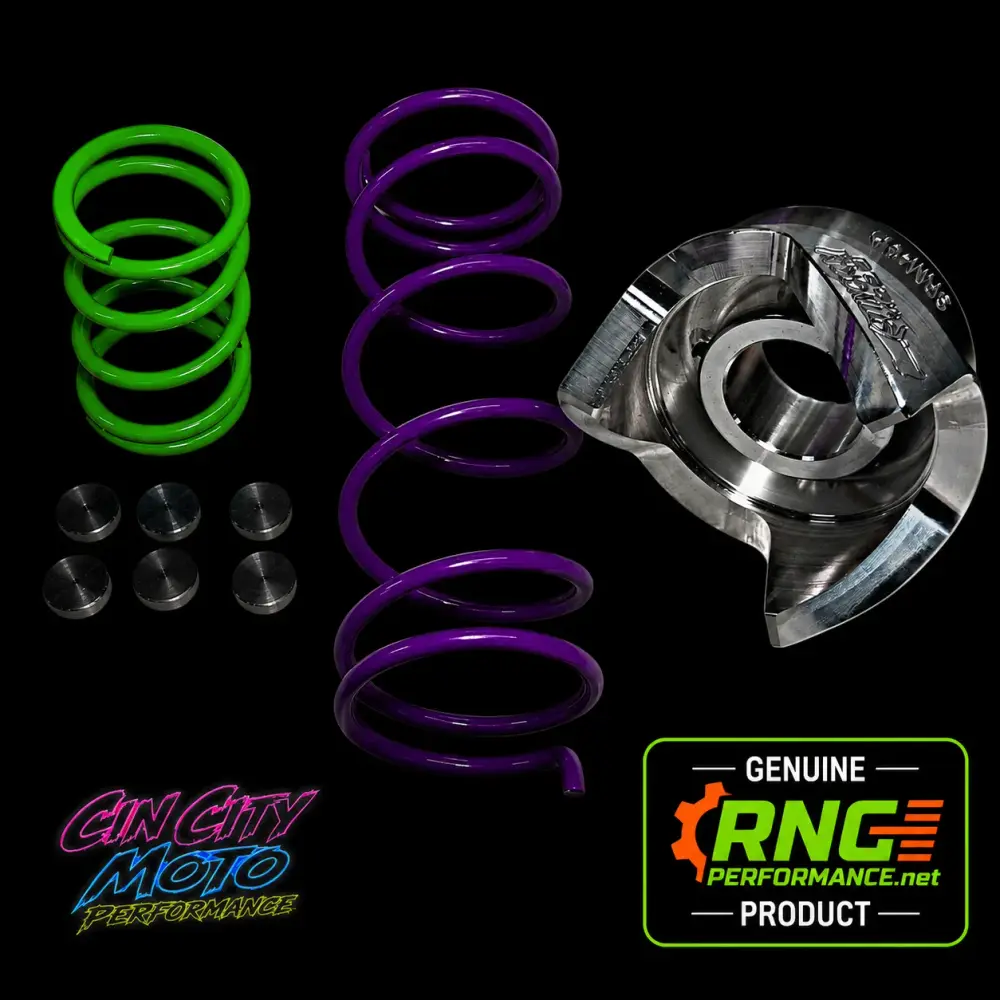
A properly spec'd clutch kit replaces the primary weights, spring, and helix so the clutch clamps the belt correctly under your actual conditions. This is the difference between chasing belts every few rides and having a machine that grips, pulls, and runs cool. If you run 28"+ tires, a clutch kit is not optional, it is the thing that stops the belt burn. Tell us your model, tire size, and how you ride, and we will build a kit that matches. If the sheaves are already contaminated with oil, clean them thoroughly with brake cleaner first; a clutch kit cannot fix a belt that is sliding on an oily sheave.
When to Call Us
If you have replaced the belt, cleaned the sheaves, and the machine still slips, or if you see bluing and scoring on the clutch faces, call us at 330-806-0728. Persistent slip after a fresh belt usually means the calibration is wrong for your setup or a clutch component is worn, and we can spec the right RNG parts to solve it for good.