Featured
filters
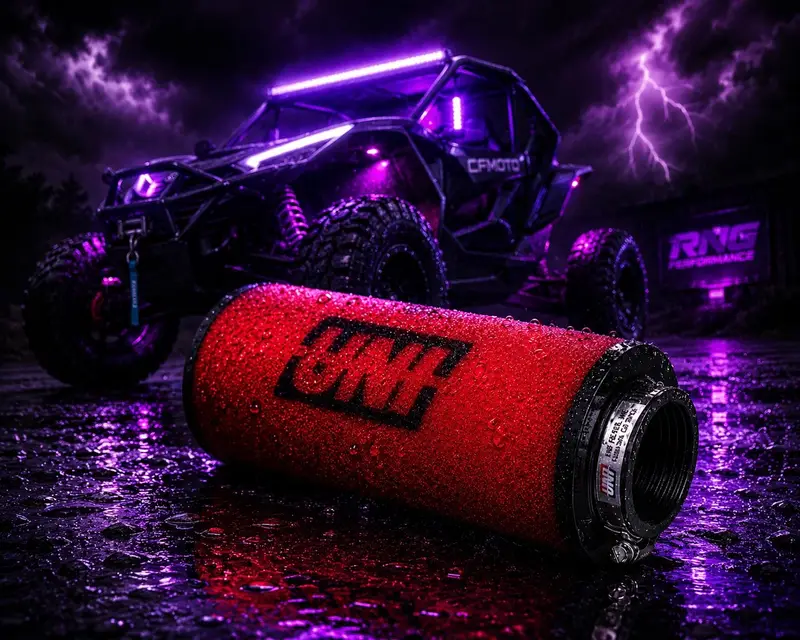
CFMOTO Air Filters by UNI (5-yr warranty)
UNI two-stage reusable air filters for CFMOTO. 24% more airflow than paper, 5-year warranty. Select by OEM part number.
From $39.99
Select Options  Authorized RNG DealerAuthorized RNG Performance Dealer· 2-3 day shipping from Cincinnati· Don't see your part? Call 513-458-9614
Updated August 19, 2026
CFMOTO uses three different plugs across the current range, and the split does not follow model families the way you would expect. The most common mistake is assuming a ZForce takes a ZForce plug — the 800 Trail and the 950 are documented in the same owner's manual and use different plugs at different gaps.
| Machine | Plug | Gap |
|---|---|---|
| UForce 1000 / 1000 XL | NGK DCPR8E | 0.031–0.035 in (0.8–0.9 mm) |
| UForce 800 XL | NGK CR8EK | 0.026–0.030 in (0.65–0.75 mm) |
| UForce 600 | NGK DCPR8E | 0.031–0.035 in (0.8–0.9 mm) |
| U10 Pro / Highland / XL | TORCH BN8RTC | 0.026–0.033 in (0.65–0.85 mm) |
| ZForce 950 Trail / Sport | NGK CR8EK | 0.026–0.030 in (0.65–0.75 mm) |
| ZForce 800 Trail | NGK DCPR8E | 0.031–0.035 in (0.8–0.9 mm) |
| Z10 / Z10-4 | TORCH BN8RTI | 0.031 ± 0.004 in (0.8 ± 0.1 mm) |
| CForce 600 / Touring | NGK CR8EK | 0.028 in (0.7 ± 0.05 mm) |
| CForce 800 / 1000 Gen 3 | NGK CR8EK | 0.026–0.030 in (0.65–0.75 mm) |
Two patterns are worth internalising. The newer OmniDrive machines — U10 and Z10 — moved to TORCH plugs, so cross-referencing from an older CFMOTO to an NGK equivalent will give you the wrong part. And the CR8EK runs a tighter gap than the DCPR8E, so if you swap plug types you must re-gap rather than fitting them as they come out of the box.
Inspect at 100 hours, 2,000 miles, or 24 months, whichever comes first, and replace if worn or fouled. In practice, plugs on these engines are cheap enough that replacing rather than inspecting at that interval is a reasonable call, especially on the twins where you are pulling bodywork to reach them anyway.
The plug is the cheapest diagnostic tool you own. Pull it and look at the insulator nose around the centre electrode.
On a twin or a triple, compare all the plugs against each other. One plug that looks different from the rest points at a single cylinder and narrows the problem down immediately.
Blow or brush the debris out of the plug well before you pull the old plug, or it drops straight into the cylinder. Start the new plug by hand and turn it several full rotations by fingers alone — if it does not, stop and back it out, because you are about to cross-thread an aluminium head. Tighten to the torque in your manual rather than by feel; over-torquing distorts the plug and can crack the insulator, and under-torquing lets combustion gases past the seat.
Check the gap with a feeler gauge before fitting, even on a new plug. Plugs get knocked in shipping, and the pre-set gap is not always the one your machine wants — particularly if you are fitting a CR8EK to a machine that came with a DCPR8E.
filters
UNI two-stage reusable air filters for CFMOTO. 24% more airflow than paper, 5-year warranty. Select by OEM part number.
engine drivetrain
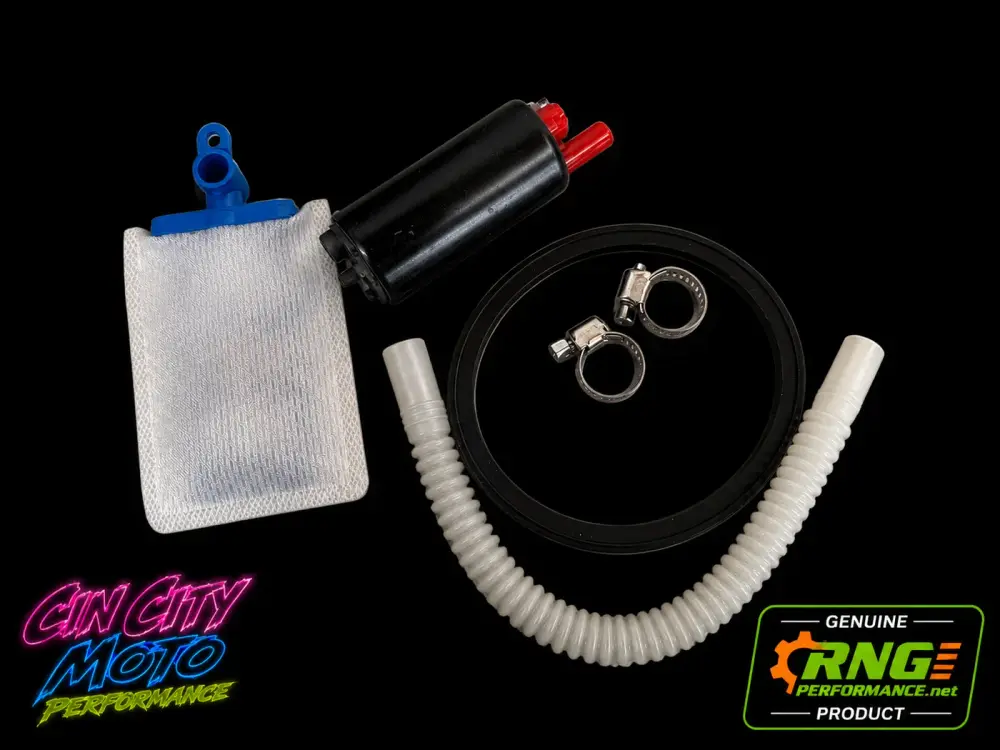
Universal CFMOTO fuel pump rebuild kit. Affordable alternative to $400 OEM pump. Fits many CForce, ZForce, and UForce models.
filters
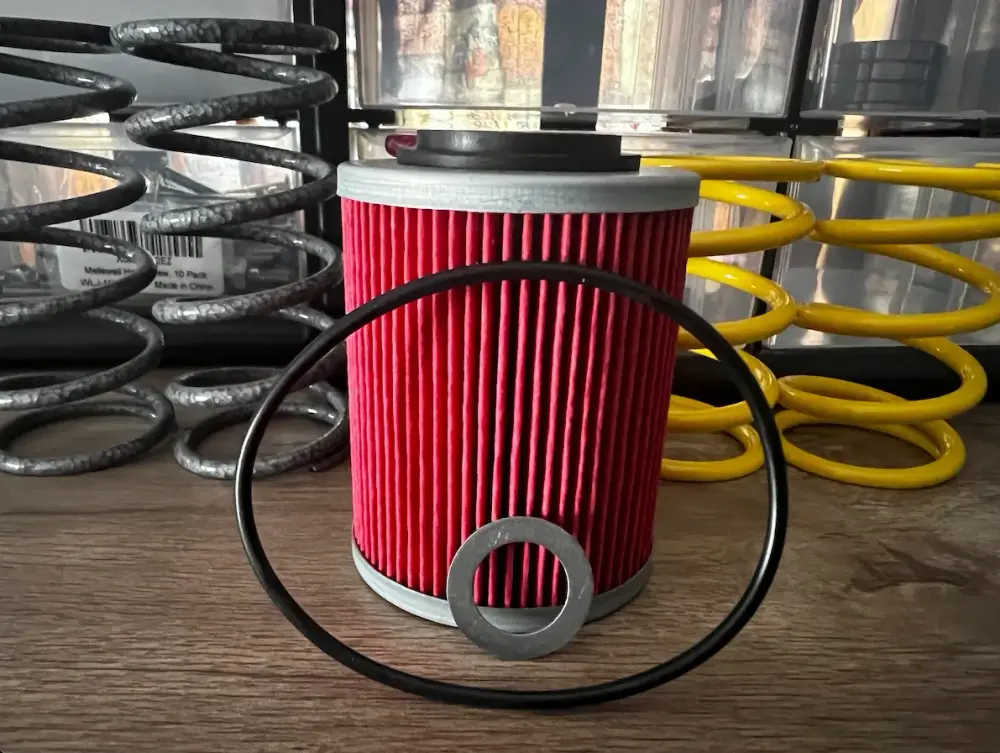
OIL Filter with O-Ring Kit, fits ALL CFMOTO ZForce, CForce, UForce (2013-2025).